How to Choose the Right Scrubs for Long Hospital Shifts ?
Anyone who's done a 12-hour shift on a hospital floor will tell you the same thing: by hour six, you stop thinking about how your scrubs look and start thinking about how they feel. The wrong fabric sticks to your back in a warm OT. The wrong fit digs into your waist when you've been on your feet since 7 a.m. And the wrong pockets mean your pen, badge, and phone are all fighting for the same three inches of space.
Scrubs are workwear before they're anything else. So picking a pair shouldn't come down to whichever colour is on sale — it should come down to what you actually do all day. Here's how to think it through.
Start with your shift, not your wardrobe
Residents on rotation, ICU nurses, OT staff, and OPD consultants don't need the same scrub. A surgeon standing at a table for four hours needs something that won't restrict shoulder movement. A resident running between wards needs a scrub that survives being sat in, stood in, and occasionally slept in during a night shift.
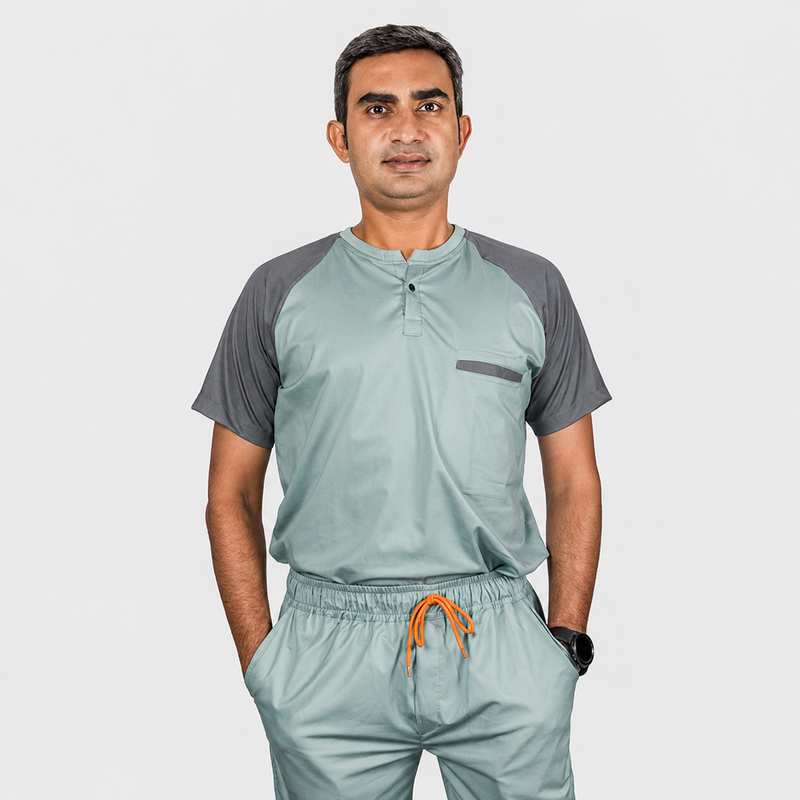
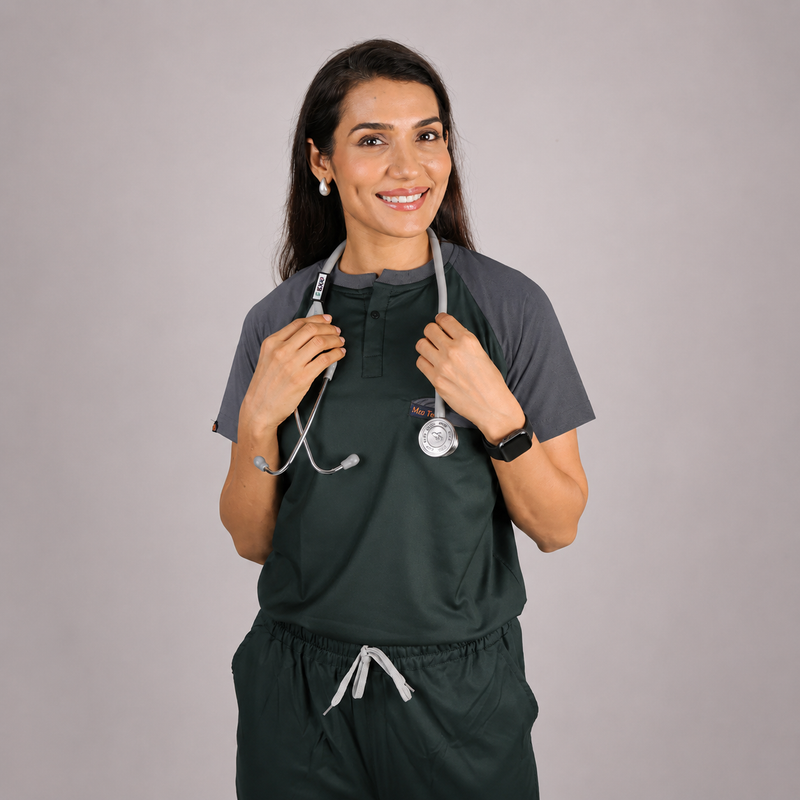
If your day is mostly movement — rounds, procedures, quick changes between wards — a stretch fabric earns its keep. MedTogs' pro-fit scrubs are built with a four-way stretch fabric specifically for this: less pulling at the shoulders and knees, and enough recovery in the fabric that they don't sag out of shape after a wash cycle or two.
If you're doing back-to-back shifts and want something that just performs day after day without much fuss, the everyday scrubs collection is the more practical, no-drama choice — durable, easy to wash, and priced for people who need three or four sets in rotation.
Fabric matters more than colour
It's tempting to shop by colour first, since most hospitals have some kind of department-wise or seniority-wise dress code. But fabric is what determines whether you're comfortable at hour two or miserable by hour eight.
Indian hospitals run warm, especially with limited AC in general wards, and synthetic-heavy blends trap heat and start smelling by midday. A cotton-rich stretch blend breathes better and holds up to frequent washing without pilling. If you have sensitive skin or work in a role with a lot of hand-washing and sanitiser exposure, this matters even more — synthetic fabric against irritated skin is not a fun combination during a long shift. MedTogs' cotton stretchable scrubs are built around this — enough stretch to move freely, but a cotton base that breathes properly under a mask and gown.
Get the fit right — not just the size
Scrub sizing charts are a starting point, not gospel. Two things trip people up most:
Rise and length. Scrub pants that ride too low will bother you every time you bend to check a chart or pick something off the floor. Too long, and the hems drag and fray within a few months. If you're between sizes, size up in the waist and hem the length rather than the other way round.
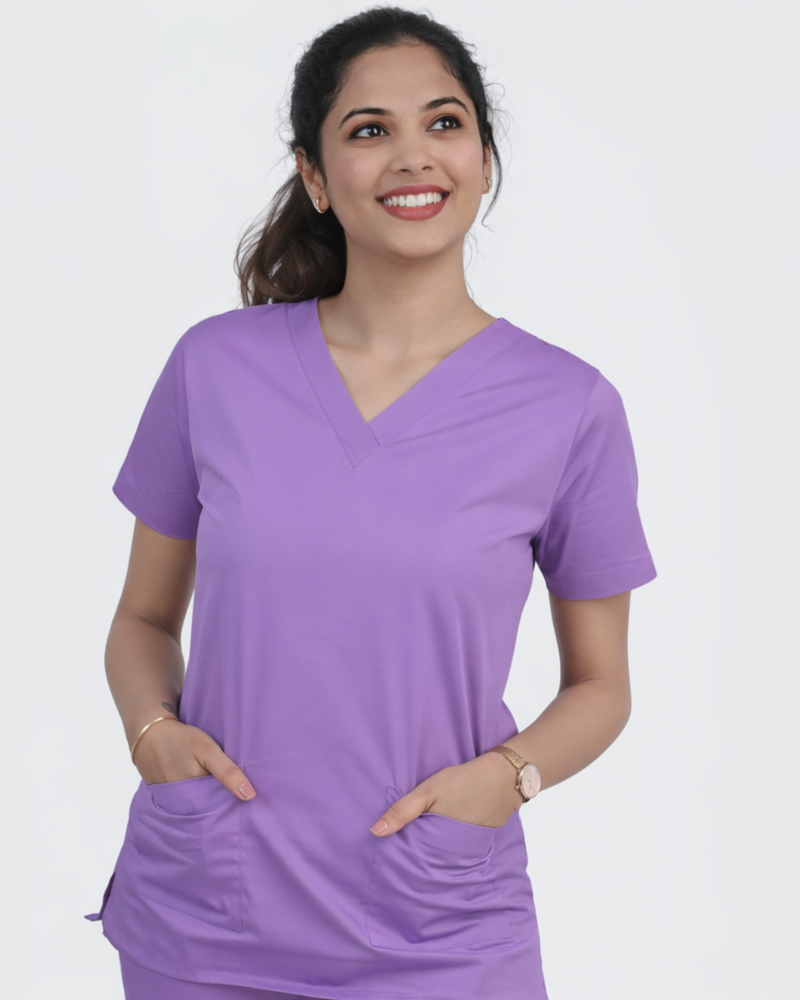
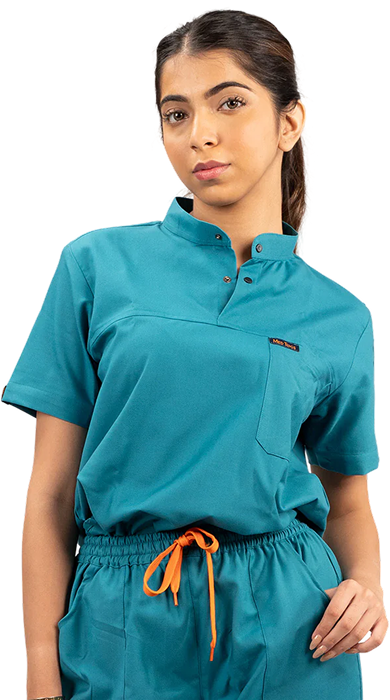
Neckline for your role. V-neck and high-neck (Chinese collar) aren't just style choices. A V-neck feels cooler and layers more easily under a warmer or lab coat, which is useful in air-conditioned ICUs or during winter OPD hours. A high-neck sits closer to the throat and tends to hold its shape better through repeated washing — a small but real difference if you're doing this five or six days a week. MedTogs stocks both across the women's scrub sets and men's scrub sets, so it's worth trying one of each before committing to a full wardrobe of one style.
Don't overlook the small stuff
A few details separate scrubs that survive a real shift from ones that look good in product photos:
- Pocket placement. You want a chest pocket that actually holds a pen without it falling out when you lean over, and side pockets deep enough for a phone that won't slide out during a fast walk.
- Stitching at stress points. Underarms and the crotch seam are where cheap scrubs fail first. Reinforced stitching there is the difference between a scrub that lasts a year and one that tears by month three.
- Colour retention. Darker scrubs — navy, black, maroon — hide stains better day to day, but only if the dye is set properly. Ask about wash-fastness if you're buying in bulk; nobody wants a uniform that fades unevenly after ten washes.
Scrub caps and layering pieces
The scrub itself is only part of the uniform. A well-fitted scrub cap that doesn't slip during a procedure, and a vest or apron for OT or lab work where you need coverage without sleeves getting in the way, round out a kit that actually works for a full shift rather than just the first hour of it.
Buying for a team or department
If you're ordering for a whole department, residency batch, or nursing staff, individual online orders stop making sense pretty quickly — sizing consistency, matching colours across a large order, and embroidery or name-tagging all need to be handled together. MedTogs handles this through bulk ordering, with custom sizing and logo embroidery available, which is worth looking into if you're coordinating for more than a handful of people.
The bottom line
The best scrub is the one you forget you're wearing by hour four. That usually means a breathable, stretch-friendly fabric, a fit that matches how you actually move through your shift, and small details — pockets, stitching, neckline — that hold up under real, repeated use rather than one nice photo. Try a couple of styles before settling into a routine of five identical sets, because what works for a desk-based OPD day won't necessarily work for a full day in theatre.
Frequently asked questions
How many pairs of scrubs do I actually need?
Most people doing five or six shifts a week end up happiest with four to five sets in rotation — enough to survive a busy week plus laundry days without scrambling. If you're just starting out, buy two or three first and see how the fabric holds up to your hospital's laundry (or your own washing machine) before committing to a full wardrobe.
Cotton or stretch — which one should I pick?
Depends on your day. If you're mostly standing, walking rounds, or sitting at a desk, cotton stretch breathes well and feels lighter over a long shift. If you're in theatre or doing anything with a lot of bending, reaching, or fast movement, a stretch pro-fit fabric moves with you and won't feel restrictive by hour six. A lot of people end up owning both and choosing based on the day ahead.
Do scrub caps actually make a difference, or are they just for compliance?
They matter more than people expect. A cap that's too loose slips mid-procedure and becomes a distraction; one that's too tight gives you a headache by lunch. Look for an adjustable back rather than a fixed elastic — it's a small thing but it's the difference between forgetting you're wearing it and fiddling with it all day.
Will dark-coloured scrubs fade faster than lighter ones?
Not inherently — it comes down to how well the fabric is dyed, not the colour itself. Cheap dye jobs fade unevenly regardless of shade, but a well-made navy or black scrub should hold its colour through dozens of washes just as well as a lighter one. If you're buying in bulk, it's worth asking about wash-fastness testing rather than assuming darker automatically means longer-lasting.
Can I order matching scrubs with my hospital or clinic's name embroidered on them?
Yes — this is usually handled as a bulk order rather than one-off purchases, since it needs consistent sizing and embroidery placement across everyone in the department. It's worth planning a few weeks ahead of when you need them, especially around the start of a new academic or residency year when everyone's ordering at once.
The best scrub is the one you forget you're wearing by hour four. That usually means a breathable, stretch-friendly fabric, a fit that matches how you actually move through your shift, and small details — pockets, stitching, neckline — that hold up under real, repeated use rather than one nice photo. Try a couple of styles before settling into a routine of five identical sets, because what works for a desk-based OPD day won't necessarily work for a full day in theatre.